
This is not the same as run notifications. Those go to the email you signed up with, and only tell you whether a run succeeded or failed — no data. Email delivery goes to any address you name and sends the results themselves.
Email sends the data to a person’s inbox. If you’d rather it landed in a system your tools already read from, use Google Sheets or Amazon S3 — or turn on several at once, since delivery channels work side by side.
Set up email delivery
1
Open the Delivery panel
Go to your Squid and click the Delivery icon in the top-right of the page. Email is the first section in the panel.
2
Enter an email address
Type the address you want notifications sent to.
3
Test it
Click Test Email. A confirmation appears at the top of the page reading Email test is successful, and a test message arrives in the inbox.Do this before saving — it’s the quickest way to catch a typo in the address.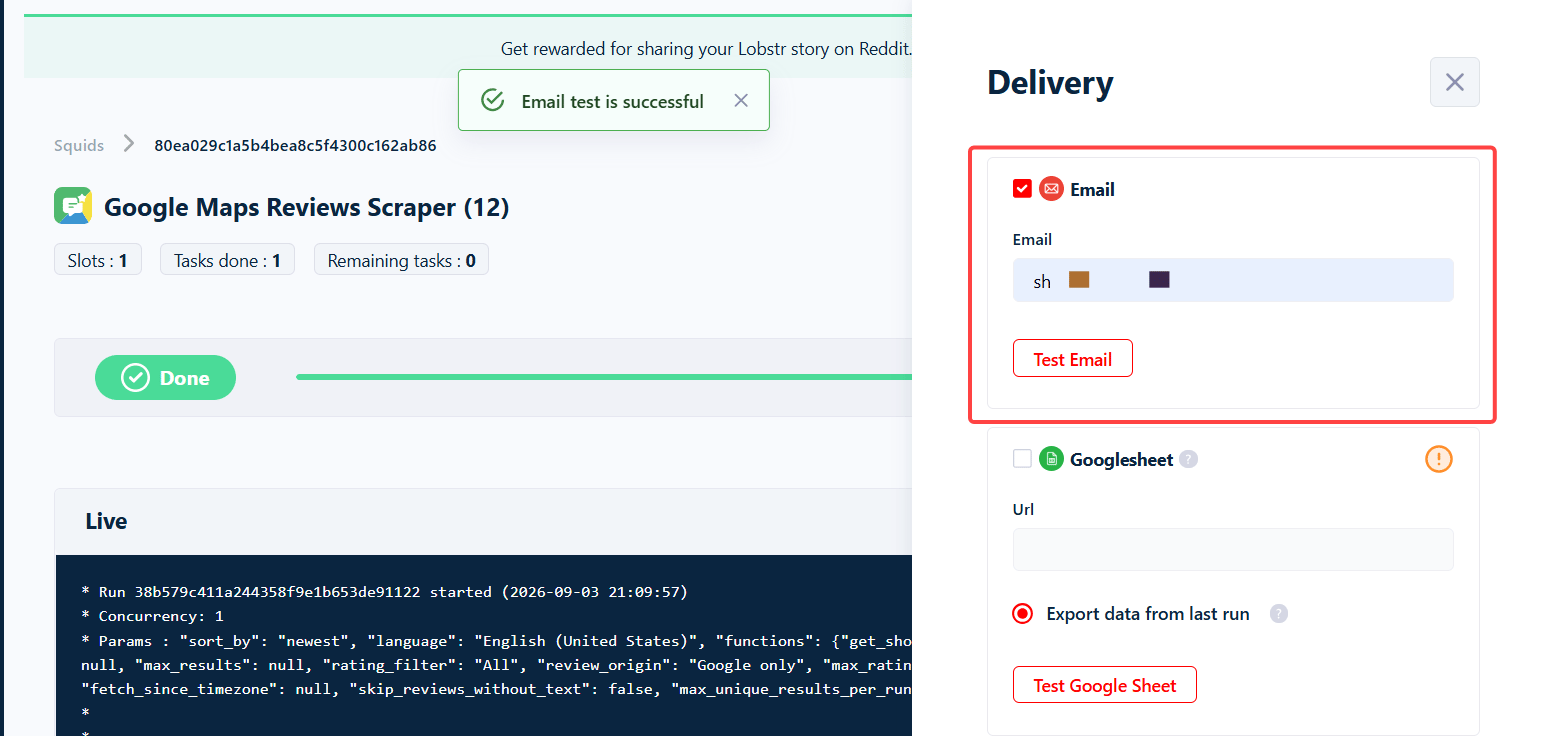
4
Enable and save
Tick the checkbox beside Email to activate it, then click Save.
What the email looks like
The message confirms your extraction is available and lists:
Below that is a red Download your data button that gets you the CSV.
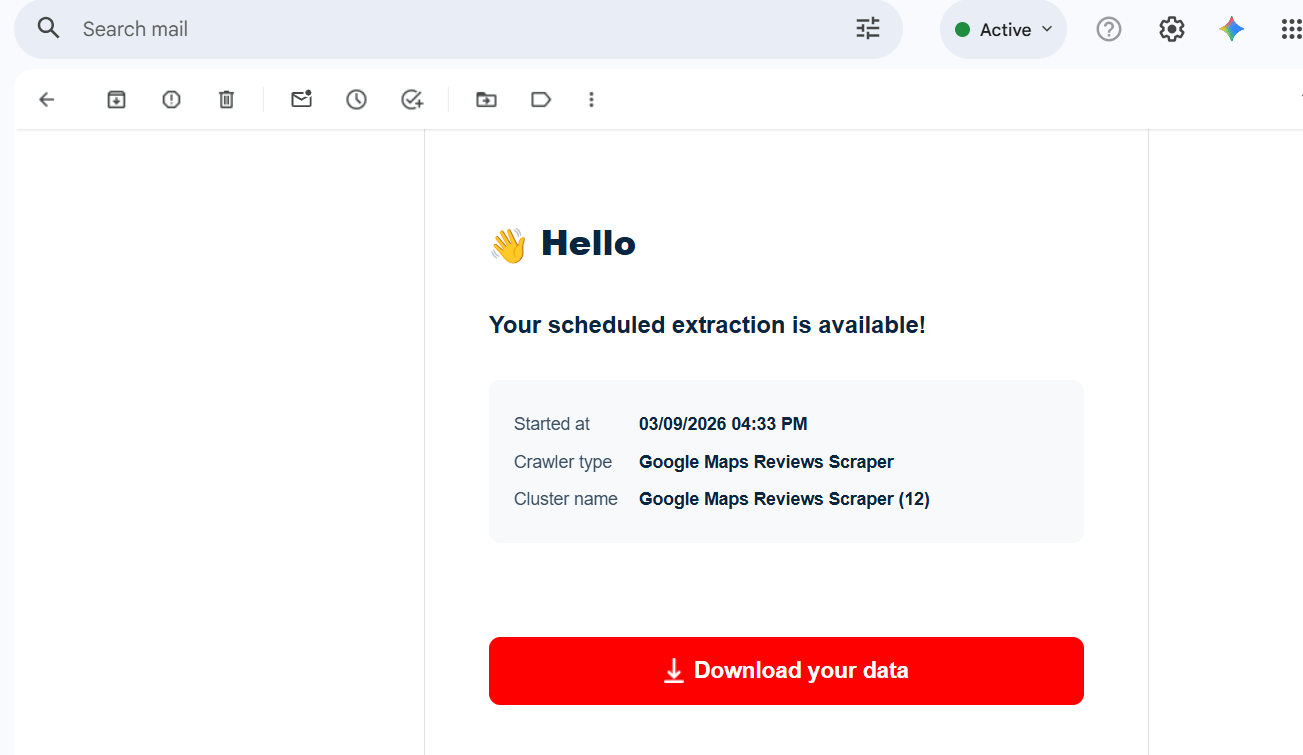
“Cluster name” is the Squid’s name — the email uses older wording for the same thing.
Things to know
- One address per Squid. The field takes a single email. To reach several people, point it at a shared inbox or a distribution list.
- Email delivery is per Squid. Set it up separately on each Squid you want notifications from.
- Data retention still applies. Results are stored for 28 days on paid plans and 7 days on the free plan. After that the email stays in your inbox but the download no longer works, so save anything you need to keep.
- You can combine delivery channels. Email, Google Sheets, SFTP, webhooks, and Amazon S3 each have their own checkbox in the Delivery panel and can all be active at once — so you can be notified by email and have the data pushed to a sheet or a bucket.
- Only successful runs send email. A run that errors out won’t. If you want to hear about failures too, turn on run notifications as well — the two work independently.
- Nothing is sent retroactively. Runs that finished before you enabled email delivery don’t trigger a message.