
Before you start
- A lobstr.io account with credits.
- A Make account.
- Your lobstr.io API key, which is what the connection authenticates with.
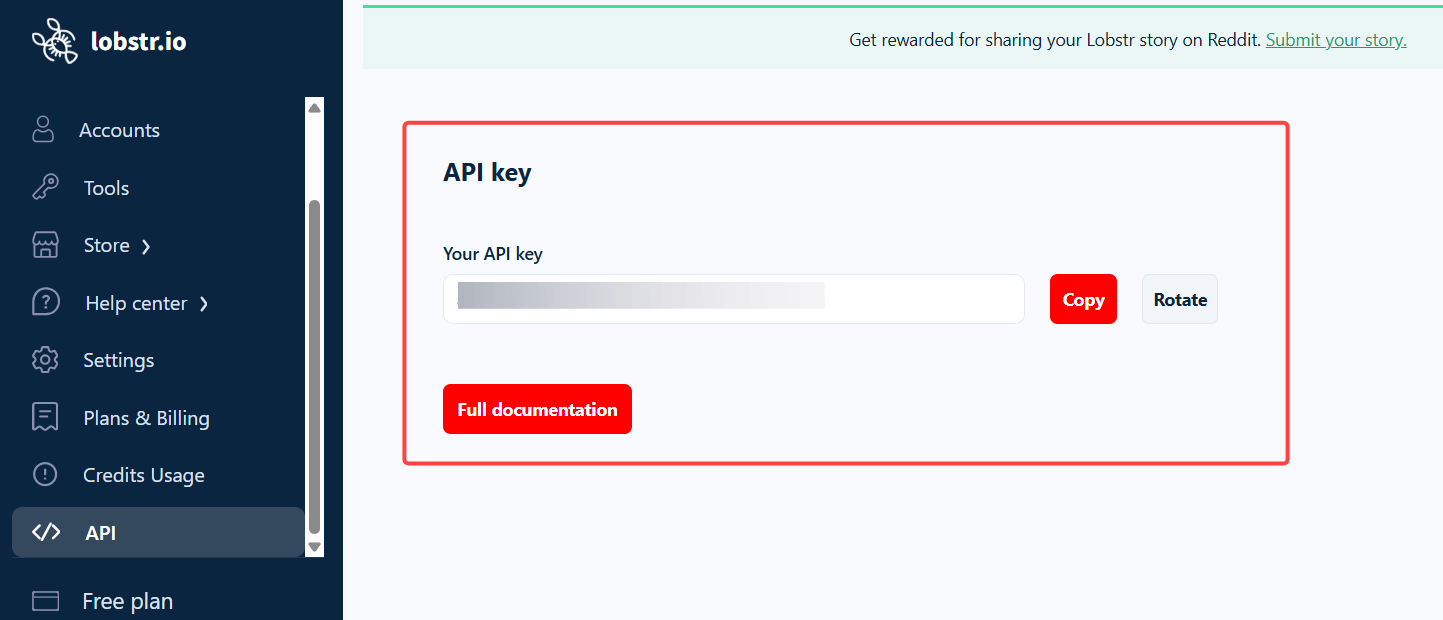
See how to find your API key for more detail, including how to rotate it.
Create the connection
1
Add a lobstr.io module
In your Make scenario, click the + button and search for lobstr.io. The app appears as LOBSTR.IO in Make’s interface. Pick any module — the connection is shared across all of them.
2
Create a connection
In the module settings, click Add next to the Connection field.
3
Paste your API key
Give the connection a name, paste your lobstr.io API key into the API Key field, and click Save.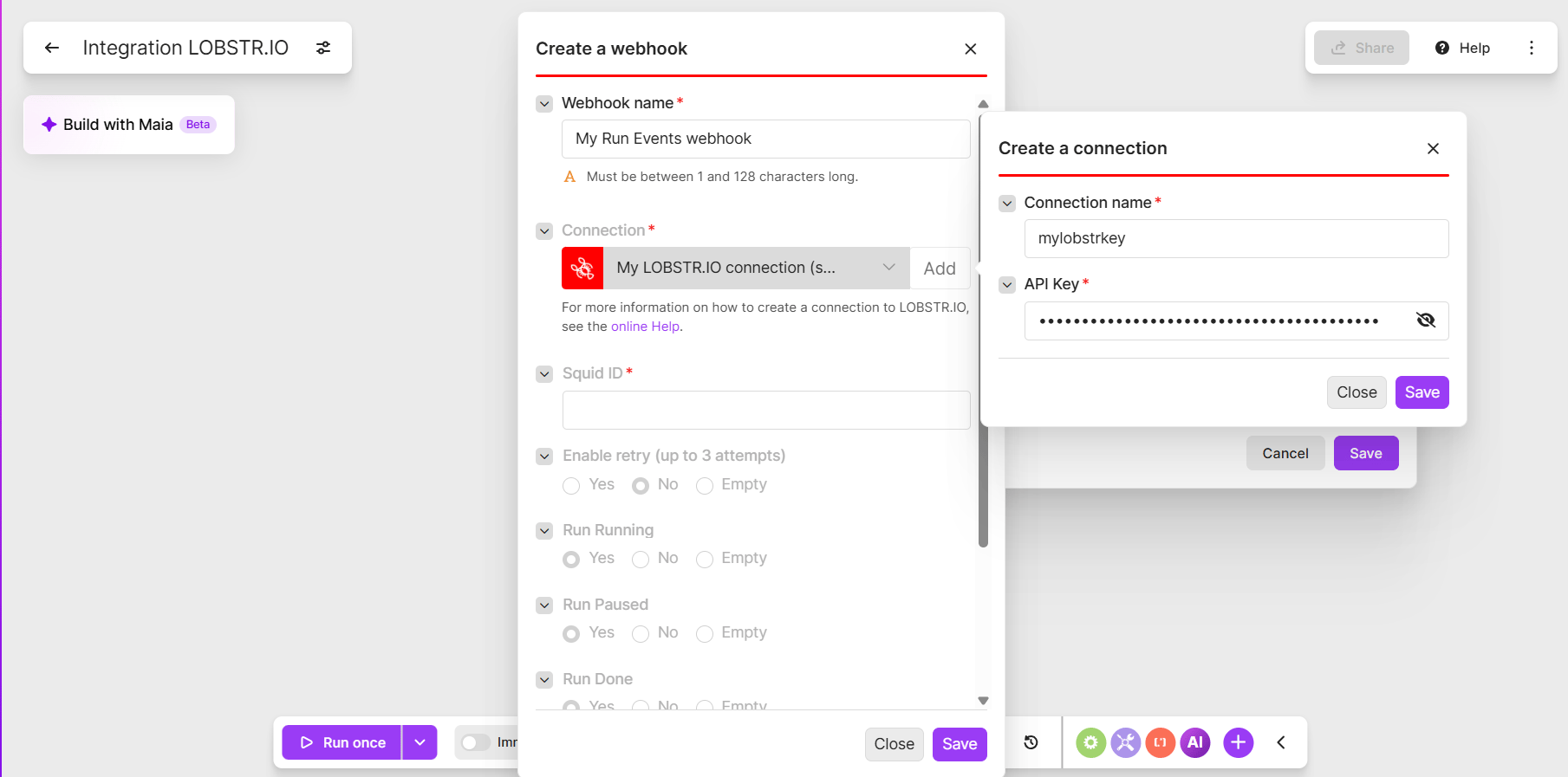
What the lobstr.io app can do
Two scenarios worth building
Push results somewhere the moment a run finishes
This is the most common setup, and it replaces the download-and-import loop entirely. Here’s the whole loop end to end:1
Add the Watch Runs trigger
Start the scenario with Watch Runs. Click Add to create a webhook: name it, pick your connection, and enter the Squid ID of the Squid you want to watch.Then toggle the events you care about — Run Done on its own is what most scenarios want. You can also enable retry, which reattempts failed deliveries up to 3 times.
2
Copy the webhook URL
Once saved, the module shows a Webhook URL that starts with 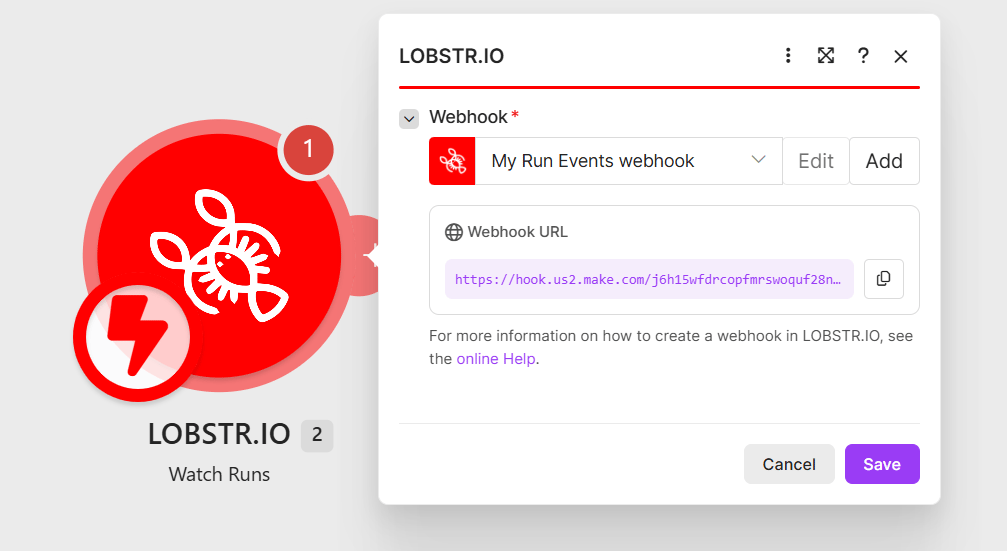
https://hook. — click the copy button beside it.3
Add the webhook URL to your Squid
Go to your Squid in lobstr.io, open the Delivery panel, expand the Webhook section, and paste the URL in. Tick the checkbox to activate it and click Save.
4
Fetch the rows
Add List Results and map the run ID from the trigger into it. This returns the rows from that run only.
5
Send the data on
Add whatever destination you need — a CRM record, a Google Sheets row, an Airtable record, a Slack message. Map the lobstr.io fields onto the destination’s fields.
If all you want is the data in a spreadsheet, you don’t need Make at all — lobstr.io can export to Google Sheets or Amazon S3 by itself. Reach for Make when the data needs shaping, filtering, or routing to more than one place.
Launch a scrape when something happens elsewhere
1
Trigger on your own event
Start with any Make trigger — a new row in a sheet, a new form submission, a webhook, a schedule.
2
Launch the run
Add Launch a Run and pick the Squid to start.
Things to know
- Runs launched from Make are ordinary runs. They show up in your dashboard, count against your slots, and draw down the same credit balance.
- Every run re-processes every task in the Squid’s list. Make doesn’t change that — if you want a run to scrape only new inputs, empty the task list and add fresh tasks before launching.
- Results are paginated. For a large run, let Make iterate through the pages rather than expecting one bundle.
- Results expire. Run results are stored for 28 days on paid plans and 7 days on the free plan, so fetch them before that.