
What it does
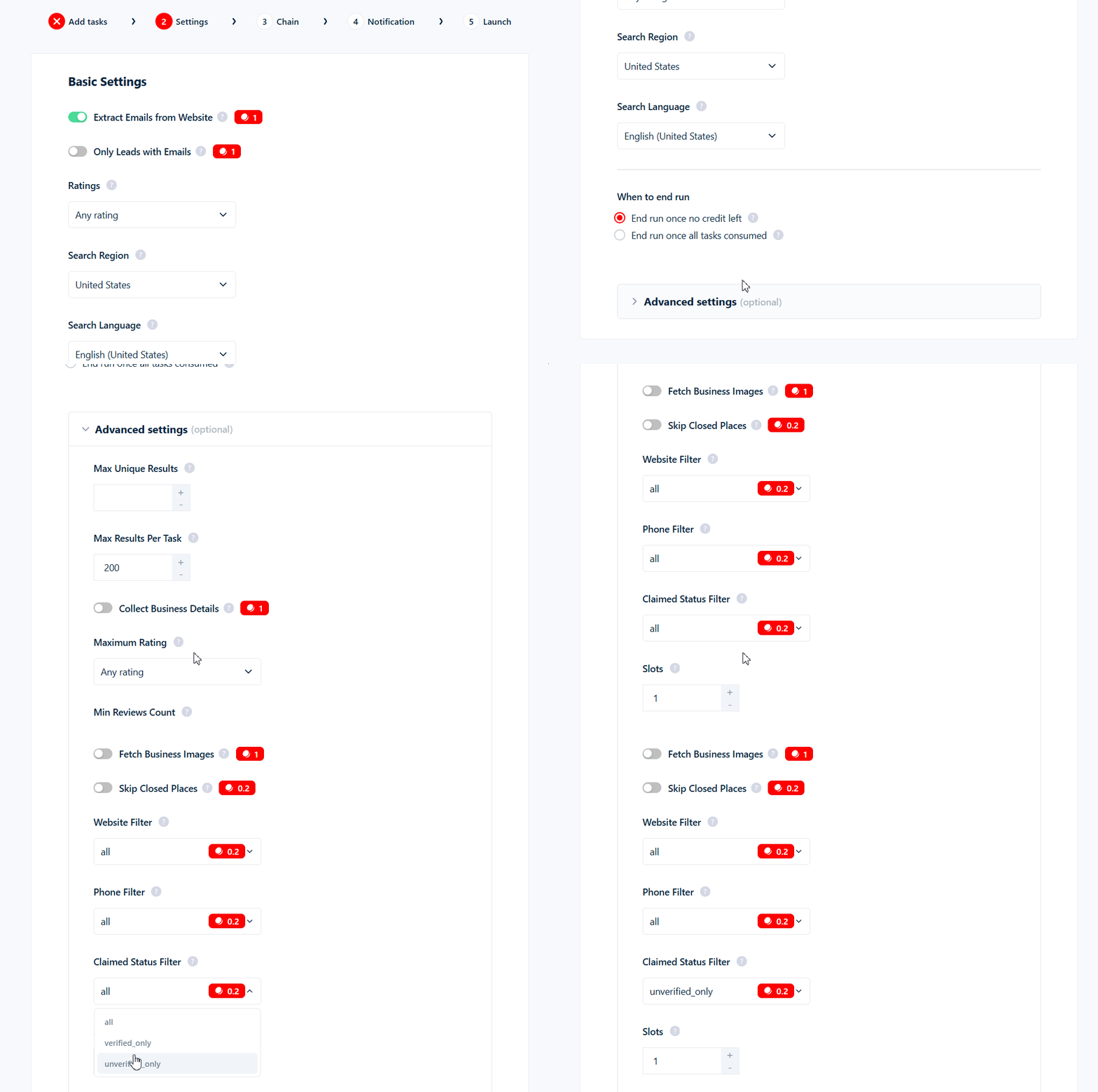
The Claimed Status Filter is a dropdown with three values:What “claimed” means
Claimed status reflects whether a business’s Google listing has been claimed by its owner. Treat it as a strong indicator rather than an official Google verification badge — describe these leads as “claimed by the owner,” not “Google-verified.”Where to find it
The Claimed Status Filter is in your Squid’s Advanced Settings. It defaults toall.
What it costs
Set toverified_only or unverified_only, it adds 0.2 credits per kept row (on top of the base 1 credit per row). Left at all, it’s free. Rows it drops cost nothing.
Use cases
unverified_only→ “claim your business” outreach. Reach owners who haven’t set up their Google Business Profile yet.verified_only→ active, responsive businesses. Owners who manage their listing are more likely to answer.
Common mistakes
- It’s an approximation. Claimed status is a strong signal but not a guaranteed verification, so treat edge cases as approximate.
- You pay per kept row. Set to
verified_onlyorunverified_only, it adds 0.2 credits to every business you keep.